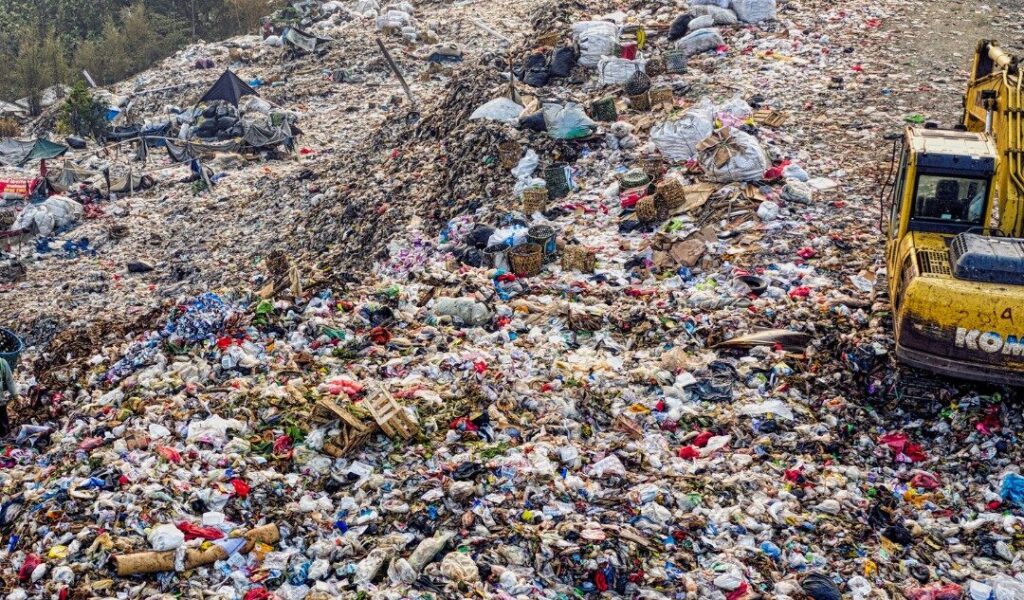
An attempt to understand solutions for the economic empowerment of Roma men and women engaged in waste management in Serbia
Introduction
The position of collectors of secondary raw materials and other, mostly informal, workers oriented towards the recycling and waste management industry in Serbia has, for years, been marked by discussions that move between the need to improve their situation and their formal or less formal exclusion from this industry.
Cases involving the criminalisation of the collection of secondary raw materials are not unknown. These include the introduction of fines for “rummaging through or collecting waste from rubbish deposited in plastic bags and containers”, and in more extreme cases, cities have even engaged private security companies which, among other tasks, are responsible for guarding waste disposal containers against collectors of secondary raw materials.
In this context, the Ministry of Environmental Protection is implementing the Solid Waste Programme in Serbia, which aims to “provide solid waste management infrastructure in line with EU standards and address key environmental challenges in the solid waste sector”, in accordance with the National Waste Management Programme 2022–2031 and the Action Plan for the period 2022–2024, adopted by the National Assembly of Serbia.
The Programme envisages support for the development of an integrated solid waste management system in Serbia through:
- the establishment of regional waste management systems based on regional waste management centres (Regional centres), each covering a specific number of municipalities;
- the establishment of a primary sorting and/or recycling system;
- the treatment and recovery of biodegradable waste and
- the development of the infrastructure necessary for waste collection (waste bins, containers, vehicles, recycling yards and transfer stations).
The Programme’s activities are being implemented in six regional centres: Nova Varoš, Kalenić, Sombor, Sremska Mitrovica, Užice and Pirot, as well as at municipal waste landfills managed by local public utility companies. These municipal landfills have either already been closed or are in the process of being closed, in accordance with the methodology for preparing rehabilitation and remediation projects, while waste from these local communities is being redirected to regional landfills.
This process also envisages the “displacement of economic activities”, which, for the most vulnerable Roma men and women who relied on sorting and recycling waste at these landfills, essentially means being prevented from carrying out their work and potentially being pushed deeper into poverty and social exclusion.
As stated on the website of the European Bank for Reconstruction and Development, the implementation of these project activities will lead to the closure of numerous uncontrolled landfills, bringing significant environmental benefits; however, it may also negatively affect waste pickers who earn an income by collecting waste from these sites. For this reason, the issue was identified during the initial project assessment, and it was agreed with the client, namely the relevant ministries, that a Livelihood Restoration Plan would be developed to address it.
The Livelihood Restoration Plan was subsequently reviewed and included in a broader initiative under the UN “PRO – Local Governance for People and Nature” programme, which provides support to informal waste pickers affected by the modernisation of waste management systems in the territories of local self-government units covered by the Project.
Between early September 2025 and the end of May 2026, The A 11 Initiative, with the support of CEE Bankwatch Network, implemented a small-scale monitoring project aimed at monitoring the implementation of the income restoration plan for Roma men and women whose previous economic activities had depended on landfills closed as a result of the construction of regional landfills across Serbia.
This text seeks to summarise the efforts that accompanied this type of monitoring and to point to some of the key challenges concerning the transparency of the project promoter and the financial institutions that provided funding for its implementation.
Initiative A 11’s Previous Experience in Working with Collectors of Secondary Raw Materials
As an organisation focused on improving the enjoyment and protection of the economic and social rights of the most vulnerable citizens in Serbia, The A 11 Initiative has so far encountered in its work numerous cases of forced evictions that threaten the enjoyment of the right to housing, as well as cases of economic displacement of Roma men and women resulting from the implementation of large infrastructure projects.
The best-known such case concerned the remediation of the Vinča landfill and the construction of a waste incinerator, financed by the European Bank for Reconstruction and Development and implemented in Belgrade. This project involved both the eviction and demolition of the structures inhabited by collectors of secondary raw materials living on the edge of the landfill, and their economic displacement, that is, the relocation of their economic activities.
Following a mediation procedure conducted in accordance with the rules of the Independent Project Accountability Mechanism (IPAM), the collectors of secondary raw materials affected by this project were provided with housing solutions and offered various options for economic empowerment. The procedure has been officially closed, and its effects, as well as the report on the implementation of the mediation agreement, are available on the European Bank for Reconstruction and Development’s website.
Other cases in which The A 11 Initiative has had the opportunity to assess the effects of eviction projects and the accompanying relocation of the economic activities of Roma men and women have varied in scope and were implemented over a longer period of time. However, one characteristic is clear: such and similar programmes, whether financed by international financial institutions or implemented in accordance with local regulations, always create disproportionately negative effects for the most vulnerable citizens.
They displace collectors of secondary raw materials from the places where they generate income, thereby contributing to their further social exclusion and poverty.
The Importance of the income restoration plan for the position of collectors of secondary raw materials affected by the programme
The Income Restoration Plan adopted within the Solid Waste Programme in Serbia envisaged that the programme would directly result in the displacement of economic activities, that is, the loss of sources of income or access to sources of income, for up to 150 informal collectors of secondary raw materials and up to 250 members of their families.
Since the displacement of the economic activities of informal collectors of secondary raw materials could not be avoided, the programme envisaged the adoption of measures to mitigate the negative effects of this displacement.
A census of informal collectors of secondary raw materials, which included both fieldwork and records kept over a longer period of time by landfill guards, established that there were 138 collectors of secondary raw materials at the landfills covered by the Programme, 41% of whom were women, across a total of 13 landfills.
The Plan further states that a total of 79 persons, or 57%, engaged in these activities for at least 10 days per month, 35% of whom were women. It was also concluded that, in most cases, at least two persons from each household were engaged in waste collection, often men and women who were spouses or life partners.
The Plan itself also notes the limitations of this approach to collecting data on persons affected by the closure and remediation of landfills. It highlights several key limitations: the fact that informal collectors most often do not engage exclusively in this activity, but rather do so irregularly, which makes their inclusion in further work on livelihood restoration a major challenge; the fluctuation of individuals engaged in the collection of secondary raw materials at landfills; the passage of time between the census and the closure or remediation of landfills; and, perhaps most importantly, the quality of the data collected.
On the basis of research into the socio-economic status of collectors and members of their households, the requirements of the Programme, domestic regulations, and the standards of the European Bank for Reconstruction and Development, the Income Restoration Plan ultimately envisaged several possible measures for restoring sources of income.
These measures concern: 1) assistance in formalising waste collection activities, either individually, through support for registering entrepreneurial activity, or collectively, through assistance in organising and establishing an organisation that would represent the interests of collectors; 2) assistance in accessing employment and training, in cooperation with the National Employment Service and other actors; and 3) access to small grants or non-refundable funds in the amount of at least EUR 3,000 for any type of household income-generating activity.
In addition to these measures, the Plan also envisaged other forms of support related to obtaining personal documents, registering with the National Employment Service, applying for social assistance, enrolling children in kindergartens and schools, and similar matters.
Bearing all of the above in mind, the initial idea of the small-scale monitoring project was to follow the effects of some of these measures through interviews with programme beneficiaries, namely Roma men and women engaged in the collection of secondary raw materials and in income-generating activities connected to landfills that were planned for closure or remediation.
The subsequent chronology of interactions between researchers from The A 11 Initiative, the European Bank for Reconstruction and Development, and UNOPS, as the implementing partner of the Livelihood Restoration Plan, illustrates the practical limitations on access to information related to the Solid Waste Programme in Serbia, as well as the impossibility of independently assessing the Programme’s impact on the most vulnerable Roma men and women affected by the activities implemented under the Programme.
On 11 September 2025, The A 11 Initiative sent an initial email to UNOPS, as the organisation responsible for implementing the Plan, requesting the contacts of family assistants in five local self-government units: Apatin, Šid, Loznica, Sremska Mitrovica and Obrenovac.
Eleven days later, on 22 September 2025, Initiative A 11 sent UNOPS an email requesting a meeting. On the same day, UNOPS informed The A 11 Initiative’s researchers that EBRD would first need to be informed of the request to visit household members who were beneficiaries of the PRO programme.
For its part, EBRD at that time suggested that UNOPS provide The A 11 Initiative’s researchers with all publicly available documents concerning the five municipalities that did not contain beneficiaries’ personal data. EBRD also proposed a joint meeting in order to understand the objectives of the request to contact beneficiaries of the Livelihood Restoration Plan.
At that point, the issue of personal data protection was also raised, since the family assistants responsible for supporting the beneficiaries had signed statements that they would not use beneficiaries’ personal data except for the purpose of providing them with support.
In the end, it was proposed that The A 11 Initiative’s researchers speak only with the family assistants who knew each family or household whose members were collectors and programme beneficiaries. It was concluded that, in order to visit the families or households of beneficiaries, we would have to go through a more formal procedure, which would include a meeting with EBRD and the submission of a letter describing the objectives of our project and the activities we intended to implement.
Subsequently, on 24 September 2025, UNOPS sent Initiative A 11’s researchers the following publicly available documents by email:
- an excerpt from the programme document describing all PRO programme activities envisaged to support informal waste pickers;
- a specially prepared overview of support in Apatin, Šid, Loznica, Obrenovac and Sremska Mitrovica;
- two separate reports on programme support for 2024 and for the period January–May 2025, submitted to EBRD, AFD, the Ministry of Environmental Protection, and SDC as the donor of the PRO programme;
- guidelines for the grievance mechanism for the protection of collectors’ rights, with a note that each family had been informed of all the ways in which they could submit a complaint concerning the conduct of actors involved or if they believed that one of their rights had been violated. Local self-government units had placed complaint boxes in accessible locations (recycling yards, the premises of private recyclers, municipal halls, and similar places, depending on the local context). It was also noted that, to date, they had not encountered any oral or written complaint from any collector benefiting from the programme’s support;
- a leaflet provided by the programme to all families, describing the support available through the programme and written in terms adapted to the understanding of the beneficiary group;
- the questionnaire completed with families at the beginning of the support process in order to establish their current status and priority needs;
- the Individual Family Support Plan template, into which measures were entered for each family and each family member, with implementation periodically monitored; and
- the two most recent monthly reports of family assistants from Loznica and Šid (with personal data redacted).
Further, on 3 October 2025, a meeting was held between The A 11 Initiative, EBRD and UNOPS. It was agreed that A 11 would send a letter to EBRD describing the organisation’s mandate, the aim and purpose of the project, and the activities we intended to carry out.
In accordance with these agreements, on 18 November 2025, The A 11 Initiative sent a formal letter to EBRD describing its mandate, the objectives of the small-scale monitoring project, the activities that were to be implemented, as well as additional questions concerning the implementation of the PRO programme.
Two months later, on 20 January 2026, the European Bank for Reconstruction and Development submitted a response stating that the objectives of the small-scale monitoring project implemented by The A 11 Initiative could not be binding on the Bank.
It referred to the Personal Data Protection Policy applicable to PRO programme beneficiaries and requested additional information about the project implemented by The A 11 Initiative, including a clear project scope, research objectives and tasks, in order to consider which additional details could be made available, as well as the possible establishment of contact with the UNOPS team during visits to the locations covered by the small-scale monitoring project.
Already after receiving this response, it was clear that independent access to information on the effects that the implementation of the Income Restoration Plan had on Roma men and women collectors of secondary raw materials would not be easy.
The assumption was that important commitments to cooperation with civil society and transparent operations would be difficult to apply in this case, and that it would not be possible independently to confirm or refute the effects of a deeply rooted approach to the economic empowerment of Roma men and women affected by projects involving the displacement of economic activities and/or forced evictions.
Further, on 29 January 2026, in connection with EBRD’s response to the letter sent by The A 11 Initiative on 18 November 2025, CEE Bankwatch Network sent an email to EBRD emphasising that the information contained in the reports provided by UNOPS could not be relied upon without prior verification with direct beneficiaries.
It proposed that EBRD provide support in organising visits and meetings with beneficiaries of the PRO programme – collectors and other affected persons – and requested that EBRD respond to the questions raised in The A 11 Initiative’s letter, while doing so in a manner that would not disclose beneficiaries’ personal data.
After that, on 18 March 2026, a new meeting was held between The A 11 Initiative, EBRD and CEE Bankwatch Network. The meeting was dedicated to resolving the remaining issues and finding a solution for carrying out monitoring that would include interviews with beneficiaries of the PRO programme, namely persons benefiting from the Livelihood Restoration Plan.
On 16 April 2026, EBRD submitted answers to the questions from the letter of 18 November 2025, as well as a list of contacts of family assistants.
Finally, on 24 April 2026, the last meeting between The A 11 Initiative, EBRD, CEE Bankwatch Network and SDC in Serbia was held. At that meeting, UNOPS representatives stated that they had informed the families about the implementation of The A 11 Initiative’s monitoring activities and that they would inform A 11 Initiative’s researchers which families were interested in speaking with them.
It was emphasised that the families should not be overburdened, as they had already participated in an internal evaluation process; that care should be taken not to undermine the trust that UNOPS had already established with the families; and that the interviews must not include photography or recording.
The A 11 Initiative’s researchers were asked to provide UNOPS with the questions that would be put to family members during the interviews, so that they could be informed in advance of the content of the interviews. Finally, The A 11 Initiative’s researchers were referred to the family assistants so that contact could be established through them with households willing to be interviewed.
Instead of a conclusion
Years of insisting on identical responses to the severe social exclusion, precarious income-generating conditions, and poverty faced by informal collectors of secondary raw materials in the implementation of eviction projects or projects involving the displacement of economic activities have so far failed to significantly improve the position of these most vulnerable Roma men and women.
For this reason, attempts to independently assess the impact of programmes and livelihood restoration plans are important. They do not serve to control any individual entity involved in project implementation, but exclusively to improve knowledge about the effects of these programmes and to develop proposals that could improve the situation in this area.
Unfortunately, in the implementation of the Solid Waste Programme in Serbia, this monitoring could not be carried out due to lengthy procedures, insufficiently clear communication, and attempts by some actors to use their internal policies to prevent independent and voluntary access to project beneficiaries.
Until some new large infrastructure project, or another project involving the displacement of economic activities, emerges, additional time will be lost only to confirm once again that rummaging through old solutions for the integration of the most vulnerable Roma men and women does not bring progress.